
Cabras
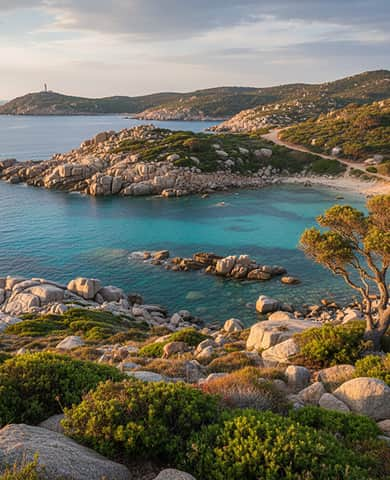
Cabras is a charming town in central-western Sardinia, overlooking the Sinis Peninsula and its eponymous lagoon, just a few kilometers from Oristano. Its territory offers a harmonious balance of sea, wetlands, sandy dunes, and a millennia-old history, making it an ideal destination for those wishing to discover an authentic Sardinia.
The landscape is dominated by the Cabras Lagoon, one of the island’s largest and most evocative wetlands, home to pink flamingos, herons, and numerous bird species. Together with the coastal dunes and Mediterranean scrub, it provides perfect scenery for birdwatching and nature walks. Within a short distance from the town are some of Sardinia’s most iconic beaches, such as Is Arutas, famous for its quartz sand with colorful reflections, and Mari Ermi and Maimoni, where crystal-clear waters meet a still-wild coastline.
Cabras is also an important historical and cultural crossroads. Nearby lie the remains of the ancient city of Tharros, founded by the Phoenicians and later flourishing in Roman times. In the town, the “Giovanni Marongiu” Civic Museum preserves artifacts that tell the long history of the Sinis area, including the famous Giants of Mont’e Prama, ancient nuragic statues. The local culinary tradition, strongly tied to the sea, centers on bottarga di muggine (cured mullet roe), a symbolic product celebrated in festivals and events that animate town life.
Within this context of deep connection to the land, the preservation of agricultural biodiversity plays a crucial role. In Cabras, Enrico Lepori works as a custodian farmer of the Sardinian Spiny Artichoke, preserving the Agris 1, Agris 2, and Agris 3 clones. Thanks to his dedication, this traditional and valuable Sardinian crop continues to be cultivated and promoted, helping safeguard the rural and cultural heritage of the area.
Bonorva
Bonorva, in the heart of the Logudoro region in northwestern Sardinia, is a charming village about 50 kilometers from Sassari. Its name, probably derived from the Latin Bonus Orbis, meaning “good land,” reflects the area’s deep connection with nature and the fertility of the Campeda plateau, long dedicated to agriculture and pastoralism.
The town preserves extraordinary evidence of a past stretching back to prehistoric times, such as the Sant’Andrea Priu necropolis, one of the most important funerary complexes in Sardinia and the Mediterranean. Its domus de janas, rock-cut tombs, date back over 5,000 years. The historic center, with its narrow streets and panoramic views, is dominated by the Church of the Nativity of Mary, built between the 16th and 17th centuries, which houses altars and works of significant artistic value.
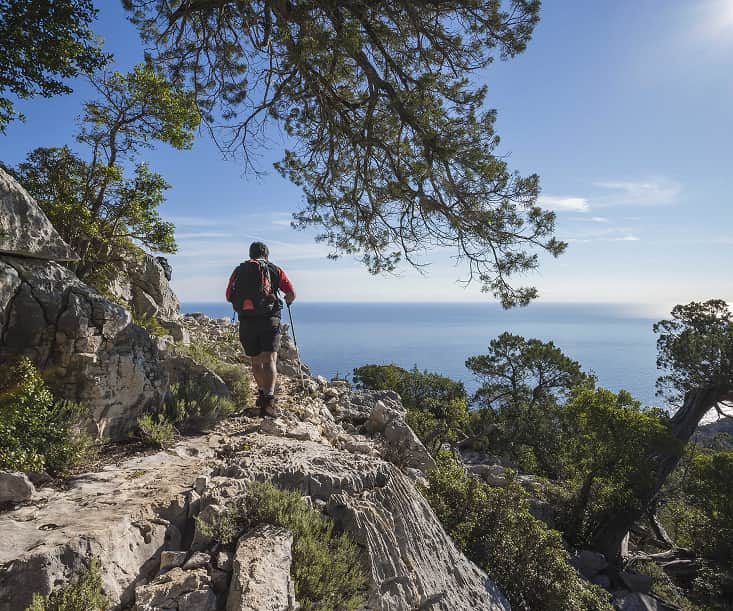
Bonorva is also a place where traditional craftsmanship remains alive, particularly textile art produced on horizontal looms, creating rugs and tapestries that reflect the cultural identity of the area. Surrounding the village is an authentic landscape of plateaus, nuraghi, ancient rock formations, and nature trails, perfect for hiking and quiet moments in the countryside.
In this context of close human-environment interaction, the preservation of local biodiversity plays an important role. In Bonorva, dedicated custodians safeguard valuable traditional breeds: Francesco Deriu, custodian of the Sardo-Bruna cow, and Maria Antonietta Cossu, custodian of the Sardinian pig. Thanks to their work and dedication, this important livestock heritage continues to be preserved, helping to maintain the rural and cultural identity of the area.
Assemini
Assemini is a charming town located just 12 kilometers from Cagliari, nestled in the fertile plain crossed by the Cixerri, Flumini Mannu, and Sa Nuxedda rivers. With around 25,500 inhabitants, it offers a harmonious blend of history, nature, and craftsmanship, providing visitors with an authentic and welcoming environment.
The historic center preserves valuable examples of traditional architecture, such as Campidanese houses built in ladiri—sun-dried clay and straw bricks—and small squares that tell centuries of community life. Notable religious buildings include the Church of San Giovanni Battista, of Byzantine origin with a Greek-cross plan, and the Parish Church of San Pietro, rebuilt in the 16th century in the Gothic-Catalan style. Strolling through the streets allows visitors to connect with a living history deeply rooted in local traditions.
Assemini is renowned throughout Sardinia for its ancient ceramic tradition, dating back to Carthaginian times and still maintained today by numerous workshops and artisan studios. This craft is one of the town’s cultural symbols, reflecting creativity, skill, and cultural continuity.
In addition to its historical and artistic heritage, the area offers important natural environments, such as the Santa Gilla Lagoon, a sanctuary for flamingos and other bird species, and the Gutturu Mannu Regional Natural Park, with forests and trails immersed in greenery. In this context of close connection to the land, the preservation of local agricultural biodiversity is also highly valued. In Assemini, Maria Carmela Deidda serves as custodian of the Camusina pear of Vallermosa and the Figu Niedda de Chia fig, traditional varieties that represent a precious agricultural heritage and help maintain the rural identity of the territory.
Alghero
Alghero, the fifth-largest city in Sardinia with around 44,000 inhabitants, is one of the main gateways to the island thanks to Fertilia Airport. Overlooking the intensely colored sea, it charms visitors with its historic center surrounded by bastions, red rooftops, and panoramic seaside promenades. The coastline, about 90 km long and known as the Riviera del Corallo, hosts the most important colony of precious coral in the Mediterranean and beautiful beaches such as Le Bombarde, Lazzaretto, Mugoni, Lido di San Giovanni, and the Maria Pia dunes. Much of the coast is part of the Capo Caccia – Isola Piana Marine Protected Area, home to the famous Neptune’s Grotto.
The surrounding territory is enriched by the Porto Conte Park, an oasis of Mediterranean scrub, forests, and lagoons, as well as numerous archaeological sites, including domus de janas, necropolises, and nuraghi. The historic center retains a strong Catalan imprint, visible in its walls and religious buildings, such as Santa Maria Cathedral and the churches of San Michele and del Carmelo. The city is also a vibrant cultural hub, with sites like Casa Manno, the Coral Museum, and cherished traditions including the Catalan New Year and Holy Week rituals.
Alghero is home to important custodians of local agricultural and livestock biodiversity: Angelo Murineddu, custodian of the Sardinian pig, and Monica Carboni, who preserves various traditional varieties such as the Arrubia almond, Appiu apple, Faita Brent’e Monza bean, Cossu almond, Camusina pear of Sassari, Niedda almond, Pompìa citrus, and Seba Mitja Vermella onion, contributing to the safeguarding of a precious heritage that defines the identity of the territory.
Arzachena
Arzachena is a town in Gallura, located about 25 kilometers from Olbia, characterized by a vast and varied territory that alternates between stunning beaches, vineyard-covered hills, striking granite landscapes, and significant archaeological sites. It has around 14,000 residents in the winter months, but an equivalent number of beds, reflecting its strong tourism vocation and steady demographic and economic growth.
The name Arzachena is closely linked to the Costa Smeralda, a symbol of elite tourism that emerged in the 1960s and became internationally renowned. Alongside luxury tourism, the local economy also relies on nautical activities, granite extraction—a distinctive element of the historic center’s architecture—and a solid wine tradition, particularly the production of Vermentino di Gallura.
From the small nucleus that grew around the Church of Santa Maria until the 17th century, the urban center has evolved into a harmonious combination of squares, pink granite and limestone facades, flowered corners, and green spaces animated by artisan workshops, boutiques, and local cafés. The municipal territory also includes historic Gallurese stazzi, often converted into agritourisms and B&Bs, and numerous hamlets such as Abbiadori, Baja Sardinia, Cannigione, Poltu Quatu, and Porto Cervo.
Within this rich and dynamic context, the protection of local biodiversity plays a key role. In Arzachena, several custodians safeguard traditional animal breeds and agricultural varieties: Santino Filippeddu, custodian of the Arrubia almond and Cossu; Santino Filippeddu also oversees the Sardo-Modicana cow, Sardinian donkey, and Sardinian pig; Luca Piasotti, protecting the Sardo-Modicana and Sardo-Bruna cows; Caterina Marchetti, custodian of the Sardinian donkey and the Asinara donkey; Pasqua Abeltino, safeguarding the Giara horse and Sardinian donkey; and Fabiola Pusceddu, custodian of the Sardinian pig. Thanks to their efforts, this invaluable heritage continues to be preserved and enhanced, maintaining Arzachena’s identity and cultural legacy.
Arbus
Arbus is a territory with a name of uncertain origin, which could derive from the Latin albus, referring to the light color of the mountain rocks; from arburis, for the ancient abundance of trees; or from arabus, linked to barbarian invasions along its coasts. More certain and deeply rooted, however, is its artisanal tradition, particularly the crafting of curved-blade knives, the is arresoias arburesas, a symbol of manual skill and local identity.
The municipality of Arbus covers one of the largest areas in Italy, second only in Sardinia to Sassari, occupying a vast territory in the central-southwest of the island. Its coastline stretches for about 47 kilometers and is among the most striking in Sardinia, alternating wide golden sand beaches, tall dunes shaped by the wind, and cliffs overlooking crystal-clear waters.
This coastal area is known as the Costa Verde, a wild and pristine landscape where some of the tallest dunes in Europe descend toward waters of intense azure and emerald green. Behind the sea, Mediterranean vegetation shaped by the mistral wind forms unique scenes, with centuries-old junipers bent close to the ground.
Arbus is a destination for those who love authentic, unconventional places, far from mass tourism, where hospitality is simple and genuine, deeply connected to Sardinian lifestyle and direct contact with nature. In this context, the presence of local biodiversity custodians plays a fundamental role: Atzeni Pietro, who safeguards the Sardo-Modicana cow, the Sardinian goat, and the Black sheep of Arbus; Schirru Monica and Schirru Roberto, custodians of the Sardo-Modicana cow; Casti Sebastiano for the Sardinian donkey; Lampis Mauro and Sandro, Saba Monica, Isu Paolo, and Dessì Ignazio, engaged in protecting the Black sheep of Arbus, with Saba Monica also active in safeguarding the Sardinian goat; and Pala Gabriella, custodian of the Sardinian goat. Thanks to their dedication, a valuable livestock heritage continues to live on, preserving and telling the deep identity of this territory.
Narcao
A village of Sulcis surrounded by hills and vineyards, Narcao tells the story of a rural Sardinia made up of silences, abandoned mines, green paths and still living agricultural traditions. It is an ideal destination for those looking for authenticity, nature and rhythms far from mass tourism.
Olbia
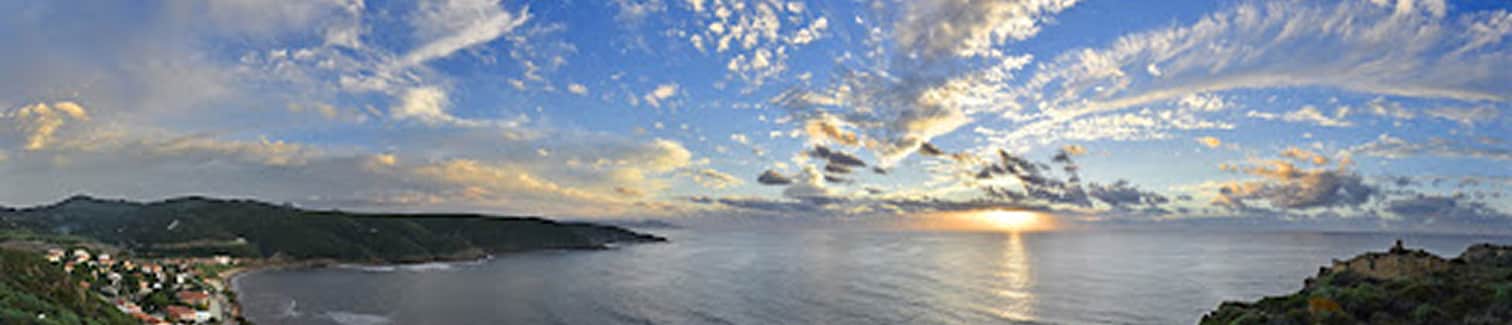
The gateway to north-eastern Sardinia, Olbia is characterised by the presence of an international port and airport and a millenary history, with a lively city life, archaeological sites and a turquoise sea. beaches overlooking Tavolara. It combines the urban soul with the natural beauty of the beaches overlooking Tavolara, connecting Gallura to the Costa Smeralda.
Orgosolo
Orgosolo, in the heart of Barbagia, is an open-air museum, where art, identity and mountain landscapes come together to tell the story of a more authentic Sardinia. Each street becomes a visual narrative of history, social struggles and popular culture, offering an intense and authentic experience, far from the classic tourist circuits.